Refreshing the latest version...
Refreshing the latest version...
Published: Nov 10, 2026, 10:01 PM
Read Time: 3 min
0:00
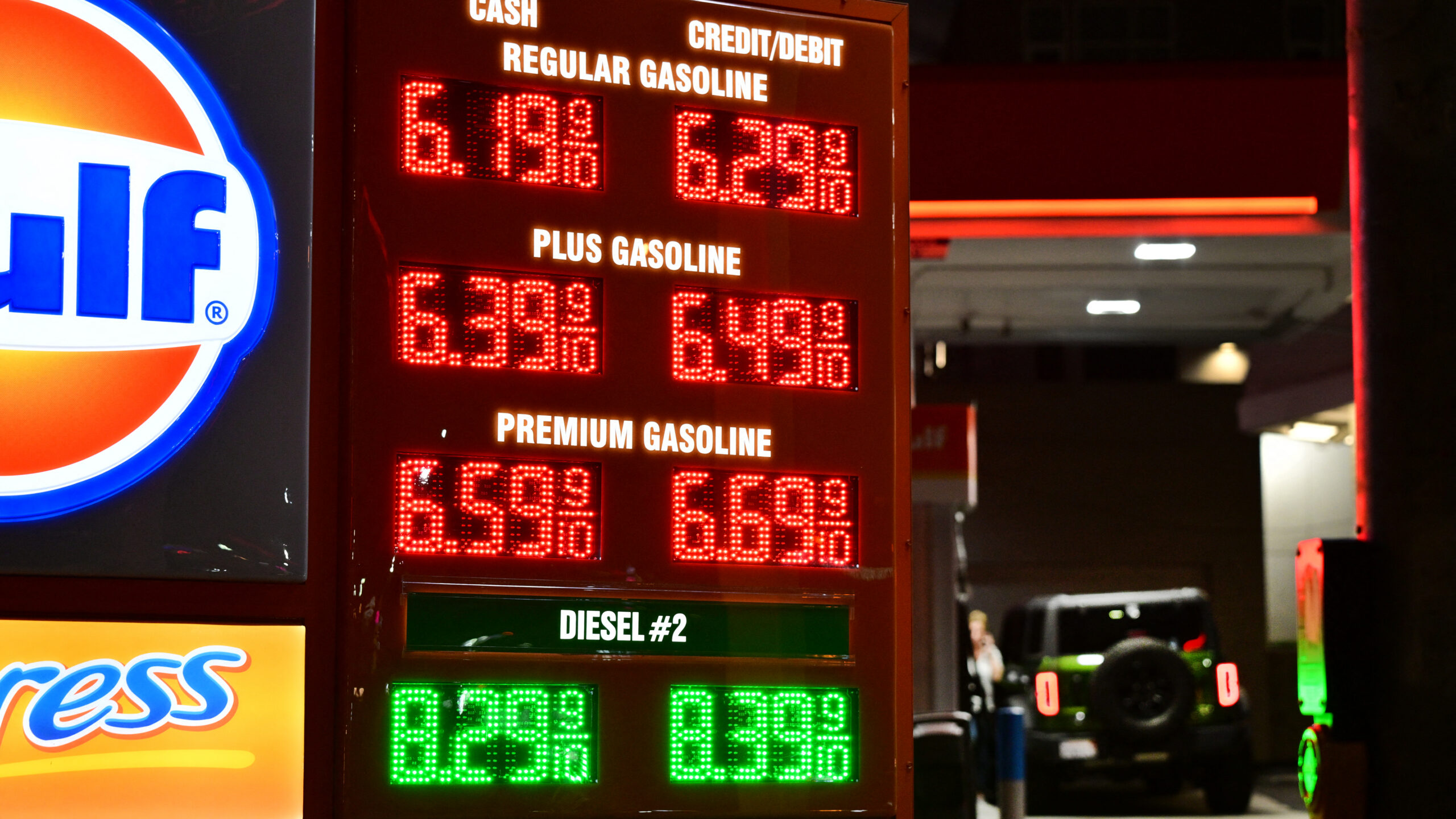
Gasoline prices in the U.S. are below $4 a gallon for the first time in nearly four months.
According to AAA, the national average for a gallon of gasoline was $3.98 on Tuesday, down from $4.56 a gallon earlier this year.
Patrick De Haan, a petroleum expert at tracking firm GasBuddy, predicts that fuel prices will continue to ease into the Thanksgiving holidays.
Diesel costs have also fallen, with the national average now running at $6.16 a gallon, down from $6.53 in late September.
Why are prices down?
Gas prices have fallen in recent weeks as filling stations switch from summer-blend fuels to cheaper winter blends. Federal rules require gas stations to sell a summer blend, designed to guard against evaporation, from June 1 to Sept. 15. Outside that period, stations are allowed to use a winter blend, which is cheaper to produce, explaining why prices often fade in the fall.
The switch to the winter blend coincides with a drop in demand, as people take fewer road trips and vacations during the winter months. According to AAA, gas prices fall by around 10 to 30 cents per gallon during the winter months for that reason.
Global oil costs, the main factor determining prices at the pump, have also dipped amid hopes that the midterm elections could open the door to a deal between the U.S. and Iran to end the war. On Tuesday, Brent crude, the international benchmark, was trading at around $91 per barrel.
In an interview with CBS News "60 Minutes" on Sunday, President Trump said he is "not looking" to escalate the war in Iran.
"I don't think there's any reason to," he told "60 Minutes" correspondent Ross Douthat.
The timeline for reaching a resolution, however, remains unclear. Gregory Brew, senior analyst for Iran and energy for the political risk consultancy Eurasia Group, said Monday that the prospect for a deal remains "unlikely."
"Despite ongoing mediation, neither the U.S. nor Iran has shifted its negotiating position," he said in a research note Monday.
While gas prices have eased, analysts say the high cost of fuel sparked by the war has spilled into other categories, keeping inflation elevated. October's CPI data, released Tuesday, shows food prices rose at a monthly pace of 0.5% in October after remaining flat in September.